"I Am Woman — The Power is Within Me" — charity calendar for the year 2025. Join to our project!
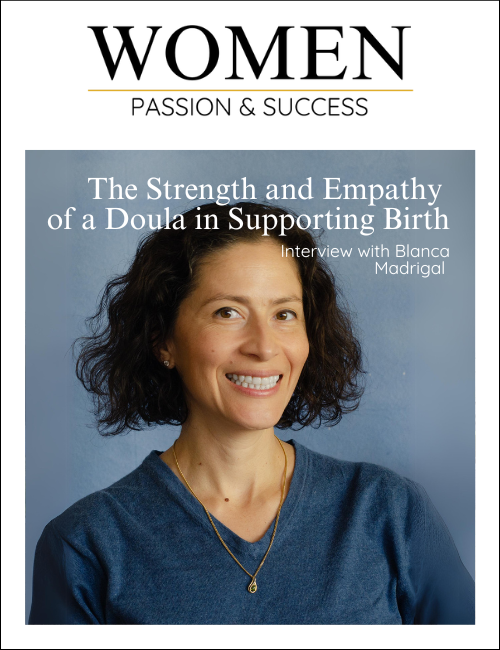
Interview with Blanca Madrigal
What inspired you to become a doula? Is there a particular story that led you to this path?
During the birth of my second child, I benefited from the services of a doula, a support that helped me through a VBAC. I had just recently learned about the profession and had been quite curious about it since. Becoming a doula was deeply inspired not only by my personal birthing experiences but by learning about other’s experiences with births AND by my interest in capturing birth stories; I knew I could support the mother in a holistic way, offering support and capturing the moments that would alter her life forever, celebrating her strength and endurance. Pursuing doula certification just made sense.
What are the main responsibilities of a doula during childbirth and the postpartum period? How do you support women and their families?
My role as a doula is to provide continuous emotional, physical, and informational support to women and their families prenatally, during labor and the postpartum period. I focus on advocating for the mother’s wishes, offering comfort techniques, and ensuring she feels empowered and supported throughout. Postpartum, I help with emotional transitions, breastfeeding support, and ensuring the family feels secure in their new roles.
How do you collaborate with medical staff in hospitals and clinics? Do you encounter any challenges, and if so, how do you handle them?
I maintain open communication with medical staff, respecting their expertise while advocating for my client’s needs and preferences. The client remains the main point of contact with the medical staff though, so as a doula I will mostly communicate with the client(s). Occasionally, there can be challenges when care protocols differ from the mother’s birth plan. In these cases, I focus on fostering a collaborative environment by staying calm and solution-oriented, ensuring that the mother’s voice is heard without creating tension.
What relaxation techniques or pain relief methods do you most often recommend to women in labor?
I often recommend breathing techniques, visualization, and massage to help manage labor pain. I also use counterpressure, warm or cool compresses, and position changes to enhance comfort. Every woman is different, so I tailor my approach to what helps her feel the most at ease. In some instances, specific movements may be used/recommended to support the flow of labor.

Is there anything that surprised you in your work as a doula? What do you consider to be the biggest challenge in this profession?
I’ve been surprised by how deeply emotional the process is, not just for the families, but for me as well. Witnessing the raw power of childbirth is humbling. The biggest challenge can be navigating the unpredictability of birth—every experience is unique, and as a doula, I must stay adaptable and calm, even when things don’t go as planned.
What are the most important benefits of having a doula present during childbirth for both the mother and the baby?
Studies suggest that doula care can make labor and delivery safer for pregnant people and their babies. A doula provides continuous, personalized support, which can reduce anxiety and fear, leading to a more positive birth experience. For mothers, this can mean a shorter labor, less need for medical interventions, and a greater sense of control. For the baby, the calming environment helps facilitate smoother bonding, and mothers often feel more confident in early caregiving. As a doula I hope to positively impact our community by contributing to positive birthing experiences. All while capturing the birthing story! (An added service if the mother chooses).
Do you have any advice for women who are considering hiring a doula but are unsure if it’s the right kind of support for them?
I would encourage them to meet with a few doulas to get a feel for the support we offer and to select one they feel comfortable with; they will be sharing very intimate moments together after all. A doula is there to empower, not replace, the medical team or family members. If they’re looking for someone to provide emotional and physical support, to advocate for their wishes, and to help them feel more in control of their birth experience, a doula could be the perfect fit.
Check more: www.blancamadrigal.com